Netflix vs IPTV: Which Streaming Service Is Best for You
Choosing the right entertainment platform for your home can feel overwhelming with so many streaming services available today. Many households in the United States struggle to decide between a dedicated on-demand library and a more traditional broadcast experience.
Netflix focuses primarily on a vast catalog of movies and original series that you can watch whenever you want. In contrast, IPTV often provides a hybrid approach by combining live television channels with scheduled programming and on-demand content.

Edit
Full screen
Delete
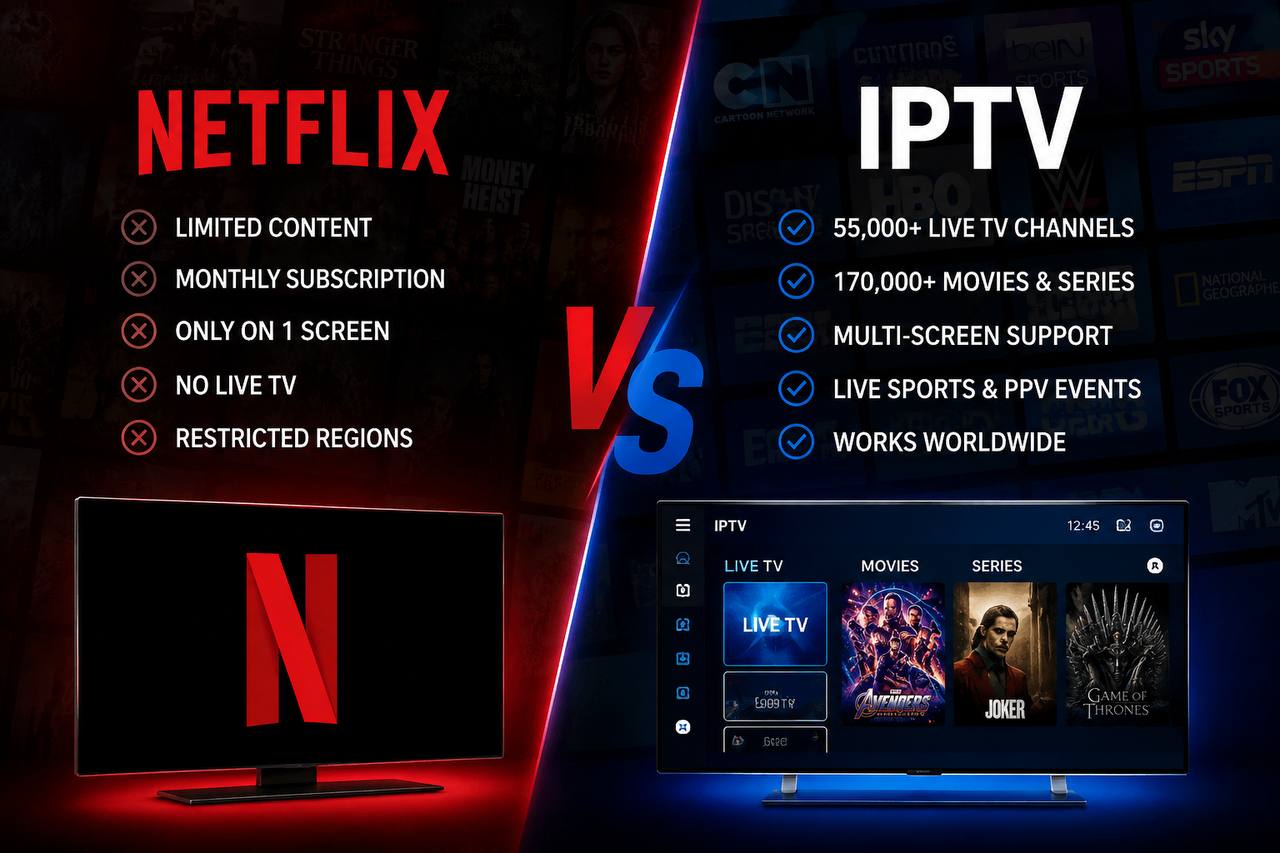
Netflix vs IPTV
Your final choice between Netflix vs IPTV depends on your specific viewing habits, budget, and technical comfort level. We will evaluate key factors like programming variety, cost, device compatibility, and overall reliability to help you make an informed decision.
Key Takeaways
- Understand the core differences between on-demand libraries and live broadcast options.
- Evaluate how your personal viewing habits influence the best service choice.
- Compare the cost structures and subscription models of different platforms.
- Assess the importance of device compatibility and user interface ease.
- Learn about the legal and reliability considerations for various streaming methods.
Choosing Between Netflix and IPTV for Home Entertainment
Navigating the modern landscape of online entertainment requires a clear understanding of how different platforms, such as Netflix vs IPTV, deliver content to your screen. While many users group all digital viewing under one umbrella, the underlying technology and delivery methods vary significantly between providers.
Making the right choice for your household regarding Netflix vs IPTV starts with recognizing these fundamental differences. By evaluating your specific needs, you can ensure your subscription aligns with your daily habits and technical setup.

Edit
Full screen
Delete
streaming services
How Netflix and IPTV Differ as Streaming Services
When comparing options like Netflix vs IPTV, Netflix operates primarily as an on-demand platform, offering a vast library of movies and series that you can watch at any time. It functions through a centralized server system where content is stored and streamed directly to your device upon request.
In contrast, IPTV operates as a core element of the Netflix vs IPTV debate, acting as a delivery method for television signals over an internet protocol network. This technology often supports both live broadcasts and scheduled programming, mimicking the experience of traditional cable or satellite TV.
Why the Best Choice Depends on Viewing Habits
Your personal viewing style serves as the most important guide when deciding on Netflix vs IPTV. If you prefer binge-watching entire seasons of shows without commercial breaks, an on-demand platform is likely your best match.
However, when exploring the realm of Netflix vs IPTV, if you enjoy the spontaneity of live sports, news, or scheduled network events, you may find that an IPTV service provides the necessary features. Understanding whether you are a passive viewer or an active content seeker will simplify your decision-making process.
Key Comparison Factors for U.S. Households
Before committing to a monthly plan, U.S. households considering options like Netflix vs IPTV should weigh several practical factors. These elements determine not only the cost but also the overall satisfaction you receive from your chosen streaming services.
Content preferences and channel requirements
When evaluating Netflix vs IPTV, consider whether you prioritize original cinematic productions or require access to local news and live sports channels. Some viewers find that a single platform meets all their needs, while others prefer a hybrid approach to cover all bases.
Budget, internet access, and household size
Your budget must account for more than just the base subscription fee, as some services require specific hardware or high-speed internet tiers. Furthermore, the number of people in your home will dictate how many simultaneous streams you need to support.
| Feature | Netflix (On-Demand) | IPTV (Live/Scheduled) |
| Primary Content | Originals & Licensed Movies | Live TV & Broadcast Channels |
| Viewing Style | Flexible/Binge-focused | Real-time/Scheduled |
| Internet Needs | Moderate to High | High (Stable Connection) |
| Best For | Movie Buffs | Sports & News Fans |
Netflix vs IPTV: Content and Programming Compared
When comparing subscription-based platforms in the context of Netflix vs IPTV, the way you find and watch your favorite shows is the biggest differentiator. While both services provide digital entertainment, they operate on fundamentally different philosophies regarding how content reaches the viewer.

Edit
Full screen
Delete
Netflix vs IPTV
Netflix’s On-Demand Movies, Series, and Original Programming
Netflix originals, licensed titles, and rotating availability
When analyzing Netflix vs IPTV, Netflix functions primarily as a massive, on-demand library. It invests heavily in original productions, which remain permanently available to subscribers. However, its licensed content—movies and shows from other studios—often rotates, meaning titles may appear or disappear based on licensing agreements.
Content profiles for children, families, and adults
The platform excels at personalization through sophisticated algorithms, an advantage often discussed in Netflix vs IPTV comparisons. Users can create distinct profiles for children, families, and adults, ensuring that recommendations remain relevant to each viewer’s specific tastes and age-appropriate needs.
IPTV’s Live Channels, On-Demand Libraries, and Specialty Programming
News, sports, local channels, and international content
In the Netflix vs IPTV debate, IPTV stands out by mimicking the traditional cable experience. It provides access to live news, regional sports networks, local broadcast channels, and a wide array of international programming that is rarely found on standard streaming apps.
Why IPTV channel lineups vary by provider
Unlike a single global service, when looking at Netflix vs IPTV, IPTV is a delivery technology used by many different companies. Consequently, channel lineups vary significantly depending on the specific provider you choose, as each company negotiates its own carriage deals with networks.
Comparing Content Discovery and Viewing Flexibility
Searching a catalog versus browsing a channel guide
Discovery on Netflix relies on search bars and category tags. Conversely, IPTV users typically navigate via an electronic program guide (EPG), which displays what is airing right now across hundreds of channels.
Live viewing, catch-up programming, and on-demand access
The viewing experience differs based on the level of control you desire. The following table highlights the core differences in how these services handle your media consumption:
| Feature | Netflix | IPTV |
| Primary Model | On-Demand | Live Broadcast |
| Navigation | Search & Browse | Channel Guide |
| Flexibility | High (Anytime) | Mixed (Live/Catch-up) |
Ultimately, your choice depends on whether you prefer the freedom of on-demand streaming or the structured, real-time nature of live television. Many households now find that using both subscription-based platforms provides the most comprehensive entertainment experience.
Live TV, Sports, and Real-Time Viewing Options
The landscape of online entertainment in the Netflix vs IPTV debate is split between those who want to binge-watch at their own pace and those who need live updates. Choosing the right platform depends heavily on whether you prioritize a library of pre-recorded content or the immediacy of a broadcast signal.
What Netflix Offers for Live and Scheduled Programming
Netflix’s focus on on-demand entertainment
When looking at Netflix vs IPTV, Netflix is built entirely around the concept of on-demand viewing. Users select titles from a vast digital library to watch whenever they choose, rather than following a set broadcast schedule.
Limitations for local news, traditional channels, and live sports
When evaluating Netflix vs IPTV, because the platform prioritizes a curated library, it does not offer traditional channel surfing. You will not find local news broadcasts, weather updates, or live sporting events on the service. For viewers who rely on streaming services to stay informed about current events, this lack of real-time access is a significant factor to consider.
How IPTV Handles Live Television and Sports Coverage
Channel packages, electronic program guides, and time-shifted viewing
In the context of Netflix vs IPTV, IPTV functions much like a traditional cable subscription, delivering live feeds directly over your internet connection. These services often include an Electronic Program Guide (EPG), which allows you to browse upcoming shows across various channels. Many providers also offer time-shifted viewing, enabling you to pause, rewind, or record live broadcasts for later.
Regional restrictions and the availability of major sports content
While IPTV, a popular alternative in the Netflix vs IPTV debate, is excellent for sports, it is subject to regional blackouts and licensing agreements. You must verify that your chosen provider carries the specific networks that broadcast your favorite teams. Always check for regional restrictions, as some content may be unavailable depending on your physical location.
Which Platform Fits Viewers Who Prefer Live Programming
Best considerations for sports fans and news viewers
If you are a dedicated sports fan or a news junkie, you need a service that provides reliable, low-latency access to live feeds. The following table highlights the key differences in how these platforms handle your viewing needs:
| Feature | Netflix | IPTV |
| Live News | No | Yes |
| Live Sports | No | Yes |
| Time-Shifting | Limited | Advanced |
Questions to ask before choosing an IPTV provider
- Does the provider offer a stable connection for live sports?
- Are local news channels included in the base package?
- Are there any hidden regional restrictions on major sports events?
- Does the interface support an easy-to-use program guide?
By asking these questions, you ensure that your choice of online entertainment aligns with your daily habits. Whether you prefer the freedom of on-demand libraries or the structure of live television, understanding these technical differences is the first step toward a better viewing experience.
Subscription Costs, Plans, and Overall Value
Navigating the financial landscape of Netflix vs IPTV requires a closer look at how these services structure their fees. While both are popular subscription-based platforms, their billing models differ significantly in how they deliver content to your home.
Netflix Pricing Structure and Household Costs
Plan differences, advertising, streaming quality, and simultaneous devices
When comparing Netflix vs IPTV, Netflix utilizes a tiered pricing model that scales based on technical features. Entry-level plans often include advertisements to keep monthly costs lower for budget-conscious users. Higher tiers remove ads, offer 4K Ultra HD resolution, and increase the number of devices that can stream simultaneously.
How Netflix account-sharing policies affect value
Recent changes to account-sharing policies in the Netflix vs IPTV discussion have shifted the value proposition for many households. Users now pay extra to add members outside their primary residence to an existing account. This policy shift means that the per-user cost can rise quickly if you share your login with friends or extended family.
IPTV Pricing and the Variables Behind Monthly Fees
Basic channel packages, premium tiers, and add-on services
IPTV services, often evaluated alongside options like Netflix vs IPTV, often mimic traditional cable structures, where pricing depends on the breadth of your channel lineup. You might start with a basic package, but costs escalate when you add premium tiers for sports, international news, or movie networks. These add-ons allow for a highly customized experience, though they can make monthly bills unpredictable.
Equipment, activation, installation, and contract-related charges
Unlike simple streaming apps, when considering Netflix vs IPTV, IPTV often involves hardware requirements that add to your initial investment. You may encounter fees for set-top boxes, professional installation, or service activation. Furthermore, some providers require long-term contracts, which can lead to early termination fees if you decide to switch services.
Comparing Total Cost Rather Than Advertised Subscription Prices
Internet service, compatible devices, and optional subscriptions
To find the true cost of your entertainment, you must look beyond the advertised monthly rate. Your high-speed internet bill is a mandatory component of any streaming setup. Additionally, you should factor in the cost of smart TVs, streaming sticks, or gaming consoles required to access these services.
Evaluating cost per channel, show, movie, or viewing hour
Smart consumers evaluate value by breaking down costs into actionable metrics. Calculating the cost per hour of entertainment helps determine if a premium package is actually worth the investment. The following table provides a breakdown of how these costs typically compare across different service models.
| Service Type | Pricing Model | Hidden Costs | Value Metric |
| Netflix | Flat Monthly Fee | Extra Member Fees | Cost per Hour |
| IPTV | Tiered Packages | Equipment/Contracts | Cost per Channel |
| Hybrid | Combined Fees | Internet Upgrades | Total Household Spend |
Device Compatibility, Internet Requirements, and Setup
Navigating the technical landscape of online entertainment in the Netflix vs IPTV debate involves balancing device compatibility with your home network capabilities. Choosing the right hardware ensures that your chosen streaming services perform at their peak potential.
Netflix Compatibility Across Common U.S. Devices
Smart TVs, Roku, Amazon Fire TV, Apple TV, and game consoles
Netflix offers broad support across almost every modern device found in American homes, making it a convenient option in any Netflix vs IPTV comparison. You can easily access your account on Smart TVs, dedicated streaming sticks like Roku or Amazon Fire TV, and high-end devices like Apple TV.
Gamers also benefit from native applications on consoles such as the PlayStation and Xbox in the context of Netflix vs IPTV. These platforms provide a consistent interface that makes finding your favorite content simple and fast.
Mobile apps, web browsers, and supported streaming hardware
Beyond the living room, Netflix remains highly accessible through mobile apps for iOS and Android, which is a key factor when evaluating Netflix vs IPTV. Users can also stream directly through web browsers on laptops or desktop computers.
This flexibility ensures that your viewing experience remains uninterrupted regardless of your location, a major advantage in any Netflix vs IPTV comparison. Reliability is a hallmark of their platform design.
IPTV Equipment and Connection Requirements
Provider-specific apps, set-top boxes, and smart TV applications
Unlike standardized platforms, IPTV often requires specific hardware or software configurations when discussing Netflix vs IPTV. Many providers supply their own proprietary set-top boxes to ensure compatibility with their broadcast streams.
While some services offer apps for Smart TVs, others may require a specific media player or a sideloaded application, an important technical consideration in the Netflix vs IPTV landscape. Always verify the hardware requirements before committing to a subscription.
Internet speed, wired connections, and household bandwidth
High-quality online entertainment depends heavily on your home network. IPTV services often demand a stable, high-speed connection to prevent buffering during live broadcasts.
- Wired connections are highly recommended for the best stability.
- Multiple simultaneous streams can quickly consume your total household bandwidth.
- Ensure your router can handle high-traffic data loads during peak viewing hours.
Setup and Troubleshooting Considerations
How Netflix simplifies account activation and device sign-in
Netflix has mastered the art of user-friendly activation, giving it a smooth edge in any Netflix vs IPTV setup. Most devices use a simple QR code or a short alphanumeric activation code to link your account instantly.
This standardized process removes the technical hurdles often associated with new hardware, which is a major benefit when weighing Netflix vs IPTV. You can typically start watching within seconds of launching the app.
Why IPTV setup can differ significantly between providers
Setting up IPTV can be a more complex endeavor that varies by provider when comparing Netflix vs IPTV. You might need to manually configure server addresses, port settings, or specific login credentials.
Because these streaming services operate differently, troubleshooting often requires contacting the provider’s support team directly. Understanding these technical differences is vital for a smooth experience.
Streaming Quality, Features, and Everyday User Experience
When evaluating modern streaming services, the user experience often defines the true value of your monthly investment. While some platforms focus on a curated library, others prioritize the breadth of live broadcast options. Understanding these differences helps you select the right subscription-based platforms for your household needs.
Netflix Features That Shape On-Demand Viewing
Personalized recommendations, profiles, watchlists, and parental controls
Netflix excels at creating a highly personalized environment for every user, which is a standout feature in the Netflix vs IPTV debate. By utilizing advanced algorithms, the service offers tailored recommendations based on your specific viewing history. You can create multiple profiles to ensure that your suggestions remain distinct from those of other family members.
The inclusion of robust parental controls allows heads of households to restrict content based on maturity ratings, adding great value in the Netflix vs IPTV comparison. Additionally, the watchlist feature makes it simple to save titles for later, ensuring you never lose track of a series you intend to binge-watch.
Offline downloads, subtitles, audio descriptions, and playback controls
Flexibility is a core component of the Netflix experience when analyzing Netflix vs IPTV. Users can utilize offline downloads to watch content while traveling without an active internet connection. The platform also provides extensive accessibility options, including high-quality subtitles and detailed audio descriptions for visually impaired viewers.
IPTV Features for Live and Multi-Channel Viewing
Electronic program guides, recording tools, and catch-up features
IPTV services are designed to mimic the traditional television experience while adding modern digital convenience, providing a different dynamic in the Netflix vs IPTV comparison. The Electronic Program Guide (EPG) acts as a central hub, allowing you to browse live schedules across hundreds of channels. Many providers also include cloud-based recording tools and catch-up features, which let you watch programs that aired earlier in the day.
Multi-screen access, channel favorites, and time-shifting options
Managing a large volume of content is easier with channel favorites, which keep your most-watched networks at the top of your list when evaluating Netflix vs IPTV. Multi-screen access is a standard expectation, enabling users to view different broadcasts on various devices simultaneously. Furthermore, time-shifting options provide the freedom to pause or rewind live television, putting you in complete control of your schedule.
Comparing Picture Quality, Playback Stability, and Navigation
Resolution support, adaptive streaming, and buffering risks
Both types of services rely on adaptive streaming to adjust video quality based on your current internet speed in the context of Netflix vs IPTV. While Netflix is known for consistent 4K HDR delivery, IPTV quality can vary depending on the provider’s server infrastructure. High-traffic events often increase buffering risks for live broadcasts, whereas on-demand platforms typically maintain more stable playback.
Interface consistency across apps, televisions, and streaming devices
Navigation consistency is vital for a frustration-free experience. Netflix maintains a uniform interface across smart TVs, mobile apps, and web browsers. In contrast, IPTV interfaces can feel fragmented, as they often depend on third-party applications or specific hardware boxes to function correctly.
| Feature | Netflix | IPTV |
| Primary Focus | On-Demand Library | Live Broadcasts |
| Content Discovery | AI Recommendations | Program Guides |
| Playback Control | Pause/Rewind/Download | Live Pause/Catch-up |
| Interface | Highly Consistent | Variable by Provider |
Legal, Privacy, and Reliability Considerations for IPTV Users
When you explore the world of streaming, it is vital to distinguish between standardized subscription-based platforms and the diverse landscape of IPTV. Many users often confuse the two, yet they operate on entirely different technical and legal foundations. Understanding these differences is essential for anyone seeking high-quality online entertainment.
Why IPTV Is a Technology Rather Than a Single Service
Differences between licensed IPTV providers and unauthorized services
IPTV is a delivery method for television content over internet protocol networks rather than a single, unified brand. Licensed providers operate by securing legal distribution rights from content creators and networks. In contrast, unauthorized services often bypass these agreements, which can lead to sudden service interruptions or legal complications for the end user.
How channel rights and distribution agreements affect availability
Legitimate services maintain stable libraries because they pay for the rights to broadcast specific channels. When a provider lacks these formal agreements, the content they offer is subject to removal at any time. This makes the availability of your favorite shows highly unpredictable on unverified platforms.
Legal and Security Risks Linked to Unverified IPTV Services
Warning signs such as unusually low prices and anonymous billing
Consumers should exercise caution when encountering services that offer thousands of channels for a suspiciously low monthly fee. These providers often utilize anonymous billing methods to avoid detection by authorities. Such practices are major red flags that the service may not be operating within legal boundaries.
Malware, phishing, data collection, and account security concerns
Unverified services often lack the robust security infrastructure found in major subscription-based platforms. Users may face risks such as malware infections, phishing attempts, or the unauthorized collection of personal data. Protecting your digital identity is difficult when a service does not prioritize user security.
Reliability and Customer Support Differences
Netflix’s standardized platform, billing, and support model
Major services provide a consistent experience through standardized apps and reliable billing systems. If an issue arises, users can access dedicated customer support teams and clear refund policies. This level of professional oversight ensures that your online entertainment remains uninterrupted and secure.
Provider-dependent uptime, service quality, and refund policies for IPTV
Reliability in the IPTV space is entirely dependent on the specific provider you choose. Some services offer high uptime, while others may suffer from frequent buffering or total service outages. Because these providers often lack formal support structures, obtaining a refund for poor service quality can be nearly impossible.
| Feature | Licensed Platforms | Unverified IPTV |
| Content Rights | Fully Authorized | Often Unauthorized |
| Security | High/Standardized | High Risk/Variable |
| Support | Professional/24-7 | Limited/Non-existent |
| Pricing | Transparent | Suspiciously Low |
Which Streaming Option Fits Different Types of Viewers?
Whether you crave live sports or on-demand binge-watching, the landscape of online entertainment offers a solution tailored to your needs. Selecting the right service requires balancing your desire for convenience against your specific content requirements.
Netflix for Viewers Who Prioritize On-Demand Entertainment
Best fit for original series, movies, and flexible schedules
Netflix excels for users who prefer to watch content on their own terms. It is the ideal choice for those who enjoy binge-watching original series and curated movie libraries without being tied to a broadcast schedule.
Advantages for families, casual viewers, and frequent travelers
Families benefit from robust profile management and parental controls. Furthermore, the ability to download content for offline viewing makes it a top-tier option for frequent travelers who need reliable entertainment on the go.
IPTV for Viewers Who Want Live Channels and Broad Programming
Best fit for live news, sports, local programming, and international channels
Households that require real-time access to live news, regional sports, and diverse international programming often find that subscription-based platforms providing IPTV services are the most effective solution. These services replicate the traditional television experience by offering a vast array of live feeds.
Important trade-offs involving setup, provider quality, and contracts
Users must consider that these services often involve more complex setup processes. You may encounter varying levels of provider quality, potential long-term contracts, and the need for specific hardware to ensure a stable connection.
Choosing Netflix for a Simpler Streaming Experience
When predictable navigation and consistent device support matter most
Netflix is renowned for its highly polished interface and near-universal device compatibility. If you value a seamless experience where the app works perfectly on every smart TV, tablet, or smartphone, this platform is difficult to beat.
When a focused catalog is more useful than a large channel lineup
Some viewers prefer a high-quality, curated catalog over the “paradox of choice” found in massive channel lists. A focused library helps you spend less time scrolling and more time enjoying your favorite shows.
Choosing a Licensed IPTV Service for a Traditional TV Replacement
When a channel guide and live programming are essential
For those who miss the familiarity of a traditional channel guide, a licensed IPTV service acts as a direct replacement for cable. It provides the structure and real-time updates that on-demand services simply cannot replicate.
How to verify licensing, customer support, and service transparency
“The true value of a service lies not just in the content it provides, but in the reliability and transparency of the provider behind the screen.”
Always prioritize providers that offer clear licensing information and responsive customer support. Verifying these details ensures that your service remains stable and secure over the long term.
Combining Netflix With IPTV or Other Streaming Services
When a hybrid setup provides better entertainment coverage
Many modern households find that a hybrid approach offers the best of both worlds. By pairing an on-demand library with a live TV service, you gain access to both evergreen content and breaking news.
How to control subscription overlap and recurring costs
Managing multiple subscription-based platforms requires careful budgeting to avoid unnecessary expenses. Regularly audit your active services to ensure you are not paying for overlapping content or features you no longer use.
Conclusion
Selecting the right home entertainment setup requires a clear look at your personal viewing habits. Netflix remains a top choice for viewers who want a vast library of on-demand movies and original series. Licensed IPTV services provide a better path for households that prioritize live sports, local news, and scheduled television broadcasts.
The debate regarding Netflix vs IPTV highlights how different platforms serve unique needs. You should weigh factors like content availability, total monthly costs, and device compatibility before committing to a plan. Reliable internet performance and legal service providers are essential for a secure experience.
Many U.S. households find that a hybrid approach works best for their needs. Combining these streaming services allows you to enjoy the best of both worlds. Monitor your total subscription spending to ensure your entertainment budget stays on track. This comparison serves as a guide to help you build a media library that fits your lifestyle perfectly.
FAQ
What is the primary difference between Netflix vs IPTV for U.S. households?
The main difference lies in how content is delivered and consumed. Netflix is a dedicated on-demand platform that allows users to stream a massive library of movies and series at any time. IPTV (Internet Protocol Television) acts more like a traditional cable replacement, delivering live channels, scheduled programming, and real-time broadcasts over the internet, often alongside an on-demand catalog.
Which service is better for watching live sports and breaking news?
IPTV is the superior choice for viewers who prioritize live events. Most subscription-based platforms in the IPTV space, such as YouTube TV or Hulu + Live TV, offer local affiliates, news networks like CNN, and sports channels like ESPN. Netflix focuses almost exclusively on scripted online entertainment and documentaries, lacking the infrastructure for comprehensive live news or sports coverage.
Can I use the same devices for both Netflix vs IPTV?
Generally, yes. Netflix is highly compatible with nearly every modern device, including Roku, Amazon Fire TV, Apple TV, and Smart TVs from brands like Samsung and LG. While many streaming services and IPTV providers also offer apps for these devices, some specific IPTV setups may require a dedicated set-top box or more complex configuration to access features like electronic program guides.
Is IPTV legal and safe to use in the United States?
IPTV is a technology, and its legality depends on the provider. Licensed services like Sling TV or Fubo are completely legal and safe. However, consumers should be wary of unverified providers offering thousands of premium channels for a suspiciously low price. These unlicensed services often lack data security, posing risks of malware, phishing, and sudden service shutdowns.
How do the subscription costs compare between these two options?
Netflix offers a straightforward pricing structure based on video quality and the number of simultaneous streams. IPTV costs are more variable, often depending on the number of channels, premium add-ons (like HBO or Showtime), and equipment rentals. When evaluating online entertainment costs, households should consider the total price, including internet bandwidth requirements and any necessary hardware.
Which platform offers a better user experience for families?
Netflix is often cited for its superior user experience, offering personalized profiles, robust parental controls, and a highly intuitive interface. IPTV provides a different kind of value through its electronic program guide (EPG) and “catch-up” features, making it ideal for households that enjoy “channel surfing” or recording live broadcasts to watch later.
Is it possible to combine Netflix vs IPTV for a better entertainment setup?
Yes, many households opt for a hybrid setup to maximize their streaming services. By combining the original, high-quality series found on Netflix with the live local and international coverage of a licensed IPTV provider, viewers can enjoy the best of both worlds. This approach ensures access to both trending movies and essential live broadcasts, though it requires careful management of monthly subscription fees.
For assistance or inquiries regarding IPTV services, you can reach out via WhatsApp at +212711204954.