IPTV Buffering: Common Causes and Quick Troubleshooting
Have you ever settled in for a movie night only to face constant playback pauses? Dealing with streaming buffering issues can be incredibly frustrating when you just want to enjoy your favorite live television or on-demand content.
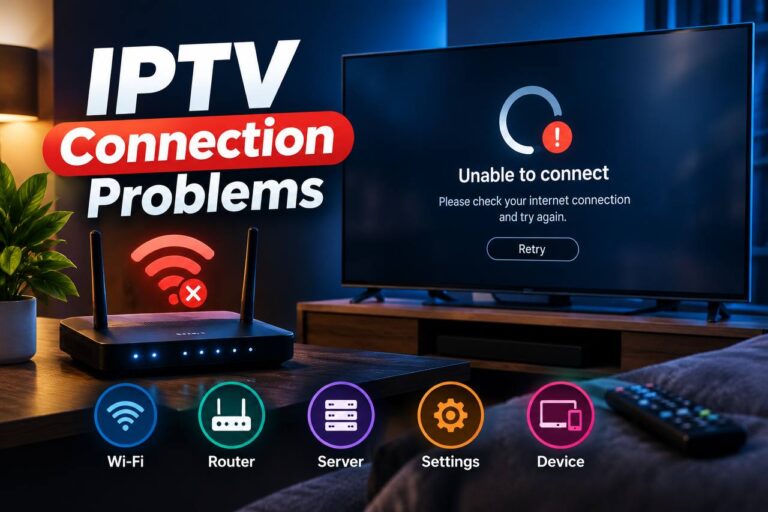
These interruptions often manifest as freezes, delayed loading, or repeated loops when comparing Netflix vs IPTV. Understanding IPTV Buffering: Common Causes is the first step toward reclaiming your viewing experience. Whether it is an unstable internet connection, weak Wi-Fi signals, or an overloaded home network, identifying the root of the problem is essential.

Edit
Full screen
Delete
IPTV Buffering: Common Causes
Other factors like underpowered hardware, poor video settings, or provider-side congestion also play a significant role in the Netflix vs IPTV landscape. This guide provides a comprehensive look at iptv buffering: common causes and quick troubleshooting to help you resolve these glitches. We will walk you through a practical IPTV buffering troubleshooting process, starting from your connection and moving through your router, device, and app settings to ensure smooth playback.
Key Takeaways
- Identify if your network speed meets the requirements for high-definition streaming.
- Check for hardware limitations on your streaming device that might impact performance.
- Optimize your router placement to eliminate weak Wi-Fi signals in your home.
- Adjust video quality settings to reduce the load on your internet bandwidth.
- Contact your service provider if the issue persists across multiple devices.
IPTV Buffering: Common Causes
Many users encounter frustrating video stream interruptions that turn a relaxing movie night into a troubleshooting session, particularly when exploring IPTV Buffering: Common Causes in the Netflix vs IPTV context. These IPTV playback problems often manifest as a spinning icon or a sudden pause in the action. Understanding these issues is the first step toward restoring a seamless viewing experience.

Edit
Full screen
Delete
IPTV Buffering: Common Causes
What IPTV buffering looks like during playback
Buffering occurs when your device runs out of pre-loaded data, which relates closely to IPTV Buffering: Common Causes within the broader Netflix vs IPTV discussion. The player must pause the video to download more content from the server to ensure smooth playback. You will typically see a loading circle or a progress bar that stalls while the system catches up.
Why buffering, freezing, and lagging are different problems
While people often use these terms interchangeably, they represent distinct technical failures. IPTV freezing usually implies a complete halt of the image, often caused by a lost connection or a crashed application. In contrast, lagging often refers to a delay between your input and the action on the screen, which is common in live sports.
If you experience iptv freezing every 10 seconds, this suggests a recurring failure in data delivery. This specific pattern often points to an unstable network connection or a device that cannot decode the incoming stream fast enough. The following table helps distinguish these common issues:
| Issue Type | Primary Symptom | Likely Cause |
| Buffering | Spinning icon/Pause | Insufficient bandwidth |
| Freezing | Static image/Total stop | Network drop or server error |
| Lagging | Delayed audio/video | High latency or processing delay |
How stream quality, device performance, and network conditions interact
High-resolution streams, such as 4K or 1080p, require significant bandwidth and robust hardware, highlighting a key aspect of IPTV Buffering: Common Causes when evaluating Netflix vs IPTV. If your internet speed is slow, the device will struggle to maintain the buffer, leading to frequent interruptions. Even with a fast connection, an older device with limited memory may fail to process high-bitrate video efficiently.
Ultimately, your viewing quality depends on the balance between these three factors, which ties directly into IPTV Buffering: Common Causes within the wider Netflix vs IPTV discussion. A weak Wi-Fi signal can undermine even the most powerful streaming player. By identifying which component is failing, you can apply the correct fix to stabilize your service.
Check Whether Your Internet Connection Is the Main Problem
A stable streaming connection is the foundation of a high-quality viewing experience. When you encounter playback issues, it is essential to distinguish between local network failures and external service problems. Understanding iptv buffering: common causes and quick troubleshooting begins with a rigorous assessment of your home internet environment.

Edit
Full screen
Delete
iptv buffering: common causes and quick troubleshooting
Run an accurate speed test near the streaming device
Most users make the mistake of testing their speed on a computer located in a different room, which often surfaces when troubleshooting IPTV Buffering: Common Causes in the Netflix vs IPTV comparison. To get an accurate reading, you must perform the test on the same device or in the same location where you watch your content. Use a reliable web-based speed test tool directly through your streaming device’s browser to capture the true signal strength reaching your hardware.
Compare the connection with the provider’s recommended speed
Once you have your numbers, compare them against the minimum requirements provided by your service, a key consideration when addressing IPTV Buffering: Common Causes within the Netflix vs IPTV context. If your IPTV internet speed falls below the recommended threshold, you will inevitably face playback interruptions. Always ensure your results are consistent across multiple tests to rule out temporary fluctuations.
Identify unstable bandwidth, high latency, and packet loss
Raw speed is not the only metric that matters for smooth video delivery, which is vital when exploring IPTV Buffering: Common Causes in the Netflix vs IPTV debate. High IPTV latency can cause significant delays, while packet loss IPTV issues often lead to frozen screens or pixelated images. These technical glitches disrupt the data flow, making it impossible for your device to maintain a steady stream.
Why download speed alone does not guarantee smooth IPTV playback
Many people assume that a high download speed is enough to prevent all issues, which is a major point of discussion regarding IPTV Buffering: Common Causes within the Netflix vs IPTV debate. However, factors like jitter and connection consistency are equally critical for live video. Even with a fast plan, unstable connections can cause the stream to stutter if the data packets do not arrive in the correct order.
How to test the connection at different times of day
Network congestion often changes depending on the time of day, which is a key factor when analyzing IPTV Buffering: Common Causes in the Netflix vs IPTV debate. You should test your connection during quiet morning hours and again during busy evening periods when your neighborhood traffic is at its peak. Comparing these results helps you determine if your provider is throttling your bandwidth or if your local network is simply overwhelmed by high demand.
Wi-Fi Issues That Cause IPTV Lagging
If you are tired of constant interruptions, your home Wi-Fi setup might be the hidden culprit behind your streaming woes, highlighting a central theme of IPTV Buffering: Common Causes within the Netflix vs IPTV debate. Many users experience a probleme buffring iptv simply because their wireless signal is not reaching the device effectively. By addressing these environmental factors, you can often restore a smooth viewing experience.
Weak signal strength and long distances from the router
The distance between your router and your streaming device plays a massive role in signal quality. As the signal travels through the air, it naturally loses strength, which leads to IPTV lagging. If your device is located on a different floor or at the far end of your home, the data packets may arrive too slowly to maintain a high-definition stream.
Interference from walls, appliances, and neighboring networks
Physical barriers like thick concrete walls or metal cabinets can significantly block your wireless signal. Furthermore, common household items such as microwaves, baby monitors, and Bluetooth speakers often create Wi-Fi IPTV problems by operating on similar frequencies. Even your neighbor’s Wi-Fi network can overlap with yours, causing unnecessary data collisions that disrupt your live feed.
Network congestion from phones, computers, consoles, and smart home devices
Your router acts like a traffic controller for all connected devices in your home, which directly ties into IPTV Buffering: Common Causes within the broader Netflix vs IPTV discussion. When multiple family members are gaming, downloading large files, or using smart home gadgets simultaneously, the bandwidth available for your stream drops. This congestion is a frequent cause of IPTV lagging WiFi, especially during peak evening hours when everyone is online.
When to switch between the 2.4 GHz and 5 GHz bands
Most modern routers offer two distinct bands to help you improve IPTV Wi-Fi performance, which is a major focus when examining IPTV Buffering: Common Causes in the Netflix vs IPTV debate. The 2.4 GHz band provides a longer range and better penetration through walls, making it ideal for devices far from the router. However, the 5 GHz band offers much faster speeds and less interference, which is usually the better choice for high-definition streaming if you are in the same room.
Why an Ethernet connection is often more reliable for live TV
While wireless technology is convenient, a wired Ethernet connection remains the gold standard for stability. By plugging your device directly into the router, you eliminate the variables of signal interference and airtime contention. This physical link ensures that your data travels without the interruptions common in wireless environments.
| Connection Type | Stability | Speed Potential | Best Use Case |
| Ethernet (Wired) | Excellent | Maximum | Primary Streaming Device |
| 5 GHz Wi-Fi | Good | High | Near-Router Streaming |
| 2.4 GHz Wi-Fi | Moderate | Low to Medium | General Browsing/Distance |
Restart and Optimize Your Home Network Equipment
Your home network is the backbone of your streaming experience, and keeping it optimized is essential for smooth playback, which directly connects to IPTV Buffering: Common Causes within the Netflix vs IPTV debate. When you notice iptv lagging wifi, the issue often stems from a congested or poorly configured local network rather than the service provider itself.
Power-cycle the modem, router, and IPTV device correctly
A simple reboot can clear temporary memory errors that cause stuttering, which is crucial to remember when analyzing IPTV Buffering: Common Causes within the Netflix vs IPTV debate. To perform this correctly, unplug your modem, router, and streaming device from the power outlet. Wait at least thirty seconds before plugging the modem back in and allowing it to fully initialize.
Once the modem is online, power on your router and wait for the status lights to stabilize. Finally, restart your IPTV device to ensure it establishes a fresh connection to your network. This systematic approach is far more effective than just restarting the application.
Place the router for better coverage and airflow
Physical placement significantly impacts your wireless signal strength, an important factor to consider regarding IPTV Buffering: Common Causes in the Netflix vs IPTV context. Keep your router in a central, elevated location away from thick walls or large metal objects that block signals. Proper ventilation is equally important, as overheating can lead to hardware throttling and performance drops.
Update router firmware and review bandwidth settings
Manufacturers frequently release firmware updates that improve stability and security, playing a vital role in addressing IPTV Buffering: Common Causes within the Netflix vs IPTV debate. Check your router’s administrative panel to ensure you are running the latest version. You should also review your bandwidth settings to ensure no other devices are hogging your connection during peak hours.
How Quality of Service settings can prioritize streaming traffic
IPTV Quality of Service (QoS) is a powerful feature found in many modern routers, offering a smart solution when troubleshooting IPTV Buffering: Common Causes within the Netflix vs IPTV debate. By enabling QoS, you can tell your router to prioritize video streaming data over less time-sensitive tasks like file downloads. This ensures your stream receives the necessary bandwidth even when other household members are active online.
When a mesh Wi-Fi system or wired access point makes sense
If your streaming device is located far from the main router, wireless signals may struggle to penetrate structural barriers, highlighting one of the key solutions for IPTV Buffering: Common Causes in the Netflix vs IPTV debate. A mesh Wi-Fi IPTV setup can extend coverage throughout your home by using multiple nodes to create a seamless signal. However, for the most reliable performance, an Ethernet IPTV connection remains the gold standard. Using a wired access point or a direct cable run eliminates the interference and latency common with wireless signals.
Device, App, and Streaming Player Problems
Even with a perfect connection, your hardware might be the reason for constant playback interruptions, which is a major factor when analyzing IPTV Buffering: Common Causes within the Netflix vs IPTV context. Many users assume that iptv lagging wifi issues are always network-related, but the streaming player itself often hits a performance wall. When a device lacks the processing power to decode high-bitrate streams, it will stutter regardless of your internet speed.
Clear excessive cache and restart the IPTV application
Over time, temporary files accumulate and can cause significant IPTV app buffering, which directly ties into the broader analysis of IPTV Buffering: Common Causes within the Netflix vs IPTV context. To resolve this, you should regularly clear IPTV cache within your device settings. A simple restart of the application often flushes out minor glitches that prevent smooth playback.
Install operating system and app updates
Software developers frequently release patches to improve compatibility and fix known bugs, which is a key consideration when reviewing IPTV Buffering: Common Causes within the Netflix vs IPTV debate. Keeping your operating system and your specific streaming application updated is essential for optimal performance. Outdated software often struggles to handle modern video codecs, leading to unnecessary frame drops.
Check storage space, memory usage, and device temperature
Streaming devices require free storage and available memory to buffer video data effectively, addressing another critical element of IPTV Buffering: Common Causes within the Netflix vs IPTV debate. If your device is nearly full, the system will slow down significantly. Furthermore, check if your device feels hot to the touch, as overheating forces the processor to throttle its speed to prevent damage.
Signs that an Amazon Fire TV Stick is struggling to decode video
If you experience Fire TV Stick IPTV buffering, look for specific warning signs like slow menu navigation or frequent app crashes. Repeated frame drops during high-resolution playback are clear indicators that the hardware is struggling. If the interface feels sluggish, the device is likely overwhelmed by background processes.
When a Roku, Apple TV, Android TV, or smart TV needs different troubleshooting
Every platform handles resources differently, so smart TV IPTV troubleshooting requires a tailored approach, making platform-specific habits crucial when exploring IPTV Buffering: Common Causes within the Netflix vs IPTV debate. While Android TV devices allow for deep cache management, platforms like Roku or Apple TV may require a full system reboot to clear memory. Always consult your specific device manual to identify the best way to manage background applications and free up system resources.
How IPTV Service Capacity and Server Health Affect Playback
Sometimes, the root of your streaming frustration lies deep within the provider’s infrastructure, highlighting another crucial dimension of IPTV Buffering: Common Causes within the Netflix vs IPTV debate. While many users immediately blame their home router, a probleme buffring iptv can often be traced back to the source itself.
Recognize server overload during popular live events
Major sporting events or global broadcasts often draw millions of viewers simultaneously, adding to the list of IPTV Buffering: Common Causes examined within the Netflix vs IPTV debate. This surge in traffic can lead to IPTV server overload, where the provider’s hardware struggles to distribute data to everyone at once.
“Reliability in digital streaming is not just about bandwidth; it is about the capacity of the delivery network to handle peak demand without compromising quality.”
Distinguish provider-side buffering from local network problems
To determine if you are facing IPTV provider buffering, you must isolate your local environment, offering clear insight into IPTV Buffering: Common Causes when comparing Netflix vs IPTV. If your internet speed is high but the stream still fails, the issue likely resides with the service provider’s routing or server health.
Comparing your experience across different devices is a great way to verify this, serving as an effective method for analyzing IPTV Buffering: Common Causes within the Netflix vs IPTV debate. If both your smart TV and your smartphone show the same lag on the same stream, the problem is almost certainly external.
Test several channels, playlists, and video-on-demand titles
Do not rely on a single stream to judge your service quality. You should test various sources to see if the IPTV channel buffering is widespread or isolated to one specific feed.
- Check different categories like news, sports, and entertainment.
- Try playing a video-on-demand title to see if it loads faster than live TV.
- Switch between different playlists if your service offers them.
Why one channel may buffer while another plays normally
Different channels are often hosted on different servers or use varying compression methods, bringing to light another technical element of IPTV Buffering: Common Causes within the Netflix vs IPTV debate. A specific IPTV service capacity bottleneck might affect only one server cluster, leaving other channels unaffected.
What to document before contacting the IPTV provider
When you reach out for support, providing clear evidence helps technicians resolve your issue faster. Keep a record of the following details:
- The specific channel names and the exact time the buffering occurred.
- Your device type and the connection method (Wi-Fi vs. Ethernet).
- Recent speed test results showing your current bandwidth.
- Confirmation that other streaming services, like Netflix or YouTube, are working correctly.
Quick Fixes for IPTV Freezing Every 10 Seconds
Dealing with iptv freezing every 10 seconds can be incredibly frustrating during a live broadcast, which is a major symptom often analyzed when discussing IPTV Buffering: Common Causes within the Netflix vs IPTV debate. When your screen stops frequently, it usually indicates that your device is struggling to keep up with the incoming data stream. Taking immediate, logical steps can often restore your viewing experience without needing technical expertise.
Pause briefly, lower video quality, and resume playback
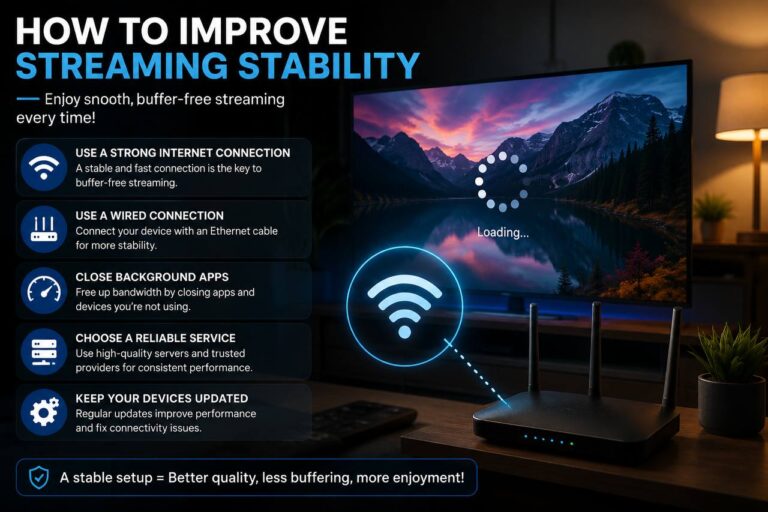
A quick IPTV buffering fix often involves giving your device a moment to catch up, which provides a practical solution directly tied to IPTV Buffering: Common Causes in the Netflix vs IPTV debate. Simply pausing the stream for ten to fifteen seconds allows the local cache to fill, which can smooth out minor playback jitters. If the problem persists, you should reduce IPTV stream quality in the player settings from 4K or 1080p down to 720p to lower the bandwidth demand.
Close background applications and stop other high-bandwidth activity
To effectively stop IPTV freezing, ensure that your network is dedicated to your stream, which is an essential preventive measure when analyzing IPTV Buffering: Common Causes in the Netflix vs IPTV context. Background applications on your smart TV or streaming box, such as auto-updating software or cloud syncing services, can consume vital resources. Additionally, check if other devices in your home are currently downloading large files or streaming high-definition content, as these activities create significant network congestion.
Reconnect the device to Wi-Fi or switch temporarily to Ethernet
Wireless signals are often prone to interference that causes sudden drops in data throughput, representing another key hardware aspect of IPTV Buffering: Common Causes within the Netflix vs IPTV debate. Try toggling your Wi-Fi connection off and on to refresh the handshake with your router. If the issue remains, connecting via an Ethernet cable is the best way to rule out wireless instability. A wired connection provides a stable, consistent path for your data, which is essential for high-bitrate video.
Adjust buffer, decoder, and hardware acceleration settings when available
Advanced users may find specific IPTV buffer settings within their player’s configuration menu, offering technical tweaks that tie directly into managing IPTV Buffering: Common Causes for the Netflix vs IPTV comparison. Increasing the buffer size can help the device handle minor network fluctuations more gracefully. You might also experiment with switching between software and hardware decoders, or toggling hardware acceleration, to see which configuration works best with your specific device’s processor.
Why repeatedly restarting the stream may not solve recurring freezes
Many users instinctively restart their stream when it freezes, but this is often a temporary patch. While a restart clears the current session, it does not address the underlying cause, such as a congested network or a server-side bottleneck. If the problem is rooted in your internet speed or the provider’s capacity, the freezing will likely return shortly after you resume playback.
| Troubleshooting Step | Primary Benefit | Difficulty Level |
| Lowering Resolution | Reduces bandwidth load | Easy |
| Using Ethernet | Eliminates Wi-Fi interference | Moderate |
| Clearing Cache | Improves app performance | Easy |
| Adjusting Buffer | Smoothes out data spikes | Advanced |
Resolution, Codec, and Compatibility Settings to Review
Fine-tuning your resolution and codec settings can often resolve persistent playback interruptions, shedding light on yet another facet of IPTV Buffering: Common Causes within the Netflix vs IPTV debate. When you encounter iptv lagging wifi, the issue might not be your internet speed, but rather how your device processes incoming data. Adjusting these technical parameters ensures that your hardware remains in sync with the stream.
Match 4K, 1080p, and 720p streams to available bandwidth
High-definition content requires significant data throughput to maintain a steady buffer, which highlights an important hardware factor when exploring IPTV Buffering: Common Causes in the Netflix vs IPTV debate. IPTV 4K buffering often occurs because the device cannot pull enough data fast enough to keep up with the high bitrate demands of ultra-high-definition video. Matching your stream resolution to your actual network capacity is a vital step for stability.
Understand the effect of H.264, H.265, and newer video codecs
Video codecs act as the language your device uses to translate compressed data into moving images, pointing to the underlying technology behind IPTV Buffering: Common Causes examined in the Netflix vs IPTV debate. H.264 IPTV streams are widely compatible but require more bandwidth for the same quality compared to newer standards. Conversely, H.265 IPTV offers superior compression efficiency, though it demands more processing power from your hardware to decode the signal effectively.
Check whether the device supports the stream’s frame rate and audio format
Even with a fast connection, IPTV codec compatibility issues can cause stuttering or audio-video desync, representing a critical technical element of IPTV Buffering: Common Causes within the Netflix vs IPTV debate. If your device struggles to decode a high frame rate or a specific surround sound format, the playback will inevitably freeze. Always verify that your streaming player is fully compatible with the specific stream profile provided by your service.
When reducing resolution improves stability without noticeably harming quality
Lowering your IPTV resolution settings from 4K to 1080p can significantly reduce the load on your network and processor, serving as a practical remedy often discussed alongside IPTV Buffering: Common Causes in the Netflix vs IPTV debate. On smaller screens, this change is often imperceptible to the human eye. This simple adjustment frequently eliminates stuttering while maintaining a crisp, enjoyable viewing experience.
How outdated hardware can cause stuttering even with fast internet
Older streaming sticks or smart TVs often lack the modern chipsets required to handle high-bitrate streams. Even if your internet speed is excellent, the hardware may hit a bottleneck during the decoding process. Upgrading your device or choosing lower-bitrate streams can help bypass these physical limitations.
| Stream Quality | Bandwidth Need | Codec Efficiency | Hardware Demand |
| 720p | Low | High | Minimal |
| 1080p | Medium | Moderate | Standard |
| 4K UHD | High | Low | Advanced |
When “Probleme Buffring IPTV” Points to a Deeper Issue
When basic troubleshooting steps fall short, you may be facing a deeper technical challenge, highlighting a complex scenario related to IPTV Buffering: Common Causes within the Netflix vs IPTV debate. Dealing with a persistent probleme buffring iptv can be frustrating, but a methodical approach helps you pinpoint the exact failure point.
Use a troubleshooting sequence to isolate the source
To resolve issues effectively, follow a strict IPTV troubleshooting sequence. Start by verifying your local hardware, then move to your home network, and finally evaluate the external connection.
- Test the stream on a different device to rule out hardware failure.
- Switch to a mobile hotspot to see if your ISP is throttling the traffic.
- Check if the issue persists across different channels or only specific ones.
Compare playback on a second device and a separate network
If you experience iptv freezing every 10 seconds, testing on a secondary device is crucial, providing an effective troubleshooting step connected directly to IPTV Buffering: Common Causes in the Netflix vs IPTV context. If the second device works perfectly, your primary streaming player likely has a software conflict or hardware limitation.
Moving your device to a different network, such as a friend’s house or a mobile data connection, reveals if your home ISP is the bottleneck, acting as a diagnostic method relevant to investigating IPTV Buffering: Common Causes in the Netflix vs IPTV debate. This simple test confirms whether the fault lies with your local router settings or the service provider’s delivery.
Identify recurring patterns linked to channels, locations, or schedules
Pay close attention to when and where the lag occurs, offering a diagnostic approach that ties straight into understanding IPTV Buffering: Common Causes within the Netflix vs IPTV debate. If problems only happen during peak evening hours, your ISP might be managing traffic congestion. If specific channels fail while others remain stable, the issue is likely on the provider’s server side.
When DNS changes may help with connection and routing issues
Sometimes, modifying your IPTV DNS settings can improve connection stability, providing a useful network tweak often considered alongside IPTV Buffering: Common Causes in the Netflix vs IPTV debate. Switching to a public DNS provider, such as Google or Cloudflare, may resolve routing delays that cause intermittent freezing.
When to replace the router, streaming device, or internet plan
Hardware eventually reaches its limit. You should consider the following signs that it is time to upgrade:
- Replace IPTV router if it cannot handle high-bitrate 4K streams.
- Upgrade your internet plan if your current bandwidth consistently falls below the required threshold.
- Replace your streaming device if it lacks the processing power for modern video codecs.
Contact the provider or internet service provider with useful test results
When you finally contact IPTV provider support, provide them with organized data. Mention the specific channels affected, the results of your speed tests, and the fact that you tested on multiple networks.
| Test Performed | Expected Result | Action if Failed |
| Speed Test | Stable 25+ Mbps | Contact ISP |
| Device Swap | Smooth Playback | Update/Reset Device |
| Network Swap | No Buffering | Check Router/DNS |
Conclusion
Achieving smooth IPTV playback requires a proactive approach to your home network and device settings, bringing together all the key aspects of IPTV Buffering: Common Causes for the Netflix vs IPTV comparison. You now possess the tools to identify whether your connection speed, router placement, or server capacity impacts your viewing quality.
Understanding IPTV Buffering: Common Causes allows you to take control of your digital entertainment. By measuring your bandwidth and testing different channels, you can isolate the root of the problem quickly. This systematic method serves as a reliable IPTV buffering solution for most users.
Documenting specific symptoms helps when you need to contact your service provider for advanced assistance. Keep a record of when freezing occurs and which devices show the most lag. This data makes technical support interactions much more productive.
Refer back to this guide on iptv buffering: common causes and quick troubleshooting whenever you encounter playback interruptions, serving as a concluding resource that brings together everything about IPTV Buffering: Common Causes within the Netflix vs IPTV debate. Consistent maintenance of your hardware and network ensures a high-quality experience for every stream.
FAQ
What are the primary reasons for IPTV buffering, and where should I start troubleshooting?
When dealing with iptv buffering: common causes and quick troubleshooting, the most frequent culprits are unstable internet speeds, weak wireless signals, or server-side congestion. You should begin by performing a speed test directly on your streaming device, such as an Amazon Fire TV Stick or Nvidia Shield, to ensure you are receiving the bandwidth promised by your ISP. If the speeds are low, restarting your Netgear or TP-Link router is often the most effective first step.
Why is my IPTV freezing every 10 seconds while the rest of my apps work fine?
If you notice your iptv freezing every 10 seconds, it typically points to an issue with data packet delivery or a struggle with the video decoder. This specific pattern suggests that the stream is not filling the “buffer” fast enough to maintain continuous playback. This can be caused by your ISP throttling IPTV traffic or your device struggling to decode high-resolution HEVC (H.265) video files. Try lowering the stream quality to 720p to see if stability improves.
How can I fix “probleme buffring iptv” when my internet speed test looks good?
A probleme buffring iptv can occur even with high download speeds if your connection suffers from high latency (ping) or packet loss, representing another diagnostic angle within IPTV Buffering: Common Causes for the Netflix vs IPTV debate. To resolve this, check if your device is running too many background applications. On an Apple TV or Android TV, force-closing unused apps can free up RAM for the IPTV player. Additionally, ensure your provider’s server isn’t overloaded by testing a different channel or a Video on Demand (VOD) title.
What can I do to stop my IPTV lagging on WiFi?
To address iptv lagging wifi, try switching your device from the 2.4 GHz band to the 5 GHz band on your router settings, as 5 GHz offers significantly higher data throughput, providing a practical networking fix related to IPTV Buffering: Common Causes within the Netflix vs IPTV debate. Keep your router away from physical obstructions like thick walls or appliances like microwaves that cause interference. For the most stable experience during live sports, many users find that using a wired Ethernet cable is the only way to completely eliminate wireless lag.
Does my hardware, like a Roku or Fire Stick, affect buffering?
Yes, hardware plays a massive role, emphasizing a crucial device-specific factor in discussions about IPTV Buffering: Common Causes within the Netflix vs IPTV debate. An older Amazon Fire TV Stick may lack the processing power to decode 4K streams smoothly, leading to stutters that look like network buffering. Ensure your device firmware is updated and that you have at least 500MB of free storage space. If the device feels hot to the touch, it may be thermal throttling, which significantly degrades video playback performance.
Why do some IPTV channels buffer while others play perfectly?
This is usually a sign of provider-side issues or source-specific routing problems, illustrating an external factor often encountered when analyzing IPTV Buffering: Common Causes in the Netflix vs IPTV debate. If a popular football match is airing, the specific server hosting that channel might be overwhelmed by high traffic. If other channels or services like YouTube work without issue, the fault lies with the IPTV service’s infrastructure rather than your home network or hardware.
Can changing my DNS settings help with IPTV stability?
In some cases, yes, especially when looking into the Netflix vs IPTV debate. If your ISP has poor routing to the IPTV servers, switching your DNS to Google DNS (8.8.8.8) or Cloudflare (1.1.1.1) can improve the connection path. While this won’t fix a slow internet plan, it can help resolve “probleme buffring iptv” related to slow domain name resolution and improve the initial loading time of your streams. If you need any help with this, you can contact us at +212698133253.